Ultrasound Scans
in Pordenone

Ultrasound Diagnostics

A non-invasive, radiation-free test to examine organs and tissues

The Nutrizione Prevenzione Medical Centre in Pordenone offers an Ultrasound service: a non-invasive diagnostic test that uses ultrasound waves to examine organs and tissues and help assess a wide range of clinical conditions.

Ultrasound can be an important tool for diagnosis, monitoring and prevention, especially when it is part of an overall medical assessment that takes into account the patient's clinical history, laboratory tests and other risk factors.

At our Centre, ultrasound diagnostics is available as a stand-alone service on request and is also integrated with the Centre's main areas of activity: clinical nutrition and dietetics, prevention, general medicine and aesthetic medicine, following a multidisciplinary approach based on clinical appropriateness.

  • Abdominal ultrasound, complete or partial (upper/lower)
  • Thyroid ultrasound
  • Soft tissue ultrasound
  • Musculoskeletal and joint ultrasound
  • Genitourinary ultrasound
  • Prostate ultrasound
  • Transvaginal ultrasound

Ultrasound

Ultrasound makes it possible to examine many anatomical structures without using ionizing radiation, unlike X-rays or CT scans.

Depending on the clinical question, it can be used to examine the liver, gallbladder, bile ducts, pancreas, spleen, kidneys, bladder, thyroid, lymph nodes and soft tissues: these are also some of the main types of ultrasound performed at our Centre.

In a prevention-oriented Centre, the value of ultrasound lies above all in the possibility of investigating a clinical suspicion or a risk factor, while avoiding indiscriminate use of the test when there is no real medical indication.

Abdominal ultrasound is one of the most frequently performed ultrasound tests and makes it possible to examine several abdominal organs.

Depending on the type of test (complete, upper or lower abdomen) and the clinical question, it may include the assessment of:

  • liver;
  • gallbladder and bile ducts;
  • pancreas;
  • spleen;
  • kidneys;
  • bladder;
  • other abdominal and pelvic structures.

When indicated, the findings can be further investigated with a Gastroenterology visit.

A thyroid ultrasound makes it possible to examine the size, structure and shape of the thyroid gland and to detect any nodules or other abnormalities.

It may be requested, based on the medical assessment, in the presence of abnormal thyroid tests, known nodules or other clinical findings that require further investigation.

It is important to distinguish structure from function: ultrasound shows the shape of the thyroid, while thyroid function is assessed mainly through hormone tests and a medical visit. For this reason, thyroid ultrasound complements the endocrinological assessment.

A soft tissue ultrasound makes it possible to examine superficial and subcutaneous structures and may be indicated, for example, to investigate lumps, cysts, lipomas, enlarged lymph nodes or other palpable abnormalities.

It is particularly useful when a lump found during a medical visit needs to be characterized more precisely.

In dietetics and clinical nutrition programmes, ultrasound can provide useful information when conditions associated with overweight, obesity or metabolic imbalances need to be investigated.

A key example is the assessment of the liver, which may be indicated in patients with obesity, diabetes, dyslipidemia or abnormal blood tests. In this context, ultrasound can help identify signs consistent with hepatic steatosis (“fatty liver”), which today is frequently associated with metabolic conditions. The local public health authority (ASFO) also includes upper abdominal ultrasound in the management of liver and metabolic diseases.

An ultrasound does not replace a medical assessment or laboratory tests, but it can become one element of a more complete pathway in which doctor, dietitian and nutritionist share the information needed to care for the patient.

Ultrasound can also be used in aesthetic medicine, a discipline that must always be regarded as a medical service.

In particular, ultrasound of superficial tissues can help with the anatomical assessment of certain areas, the identification of previously injected materials and, in specific situations, the investigation of any problems following aesthetic treatments.

At our Centre, any use of ultrasound in aesthetic medicine is always evaluated by the doctor based on clinical need, safety and the appropriateness of the treatment, avoiding automatic or unnecessary tests.

The test is performed with a probe placed on the skin, using a gel that helps transmit the ultrasound waves.

It is generally well tolerated, and the preparation depends on the area to be examined: for example, fasting may be required for some abdominal ultrasounds, while a full bladder may be needed for the lower abdomen.

We recommend bringing any previous ultrasounds, reports, laboratory tests and clinical documents that may be useful to the doctor.

Book an ultrasound in Pordenone

At the Nutrizione Prevenzione Medical Centre, an ultrasound can be performed as a single diagnostic test or, when indicated, as part of a multidisciplinary programme of prevention, nutrition and health assessment.

The aim is to use the test when it is truly useful, making the results available to the professionals who follow the patient.

To book an ultrasound, please call the Centre on +39 0434 966 679.

Call +39 0434 966 679

Medical Staff

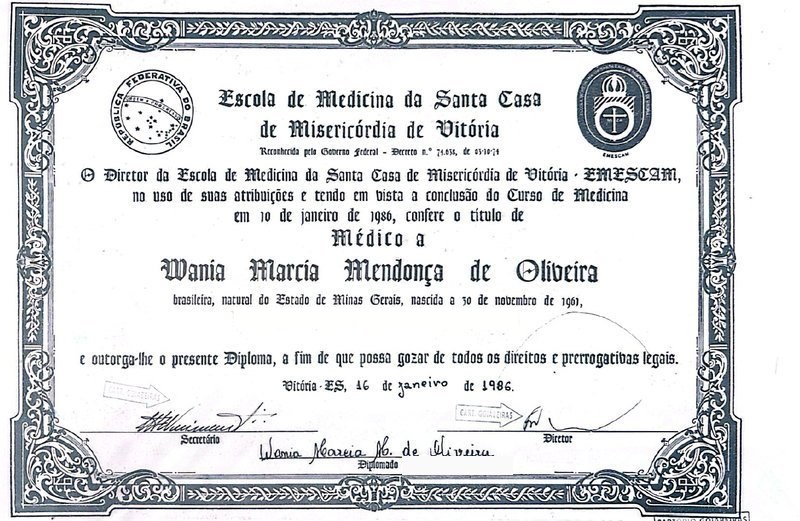
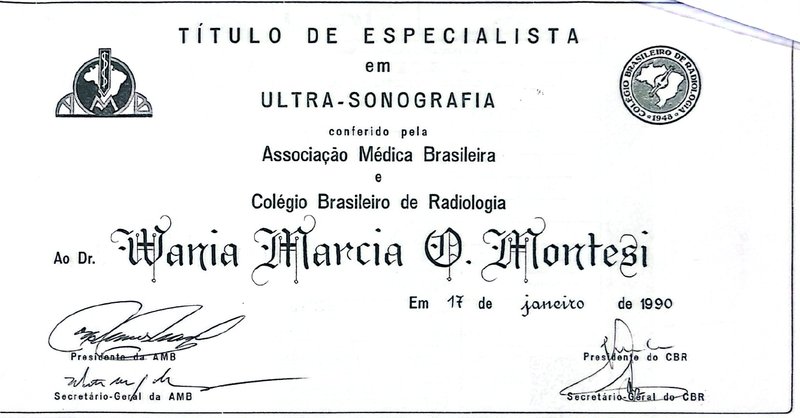
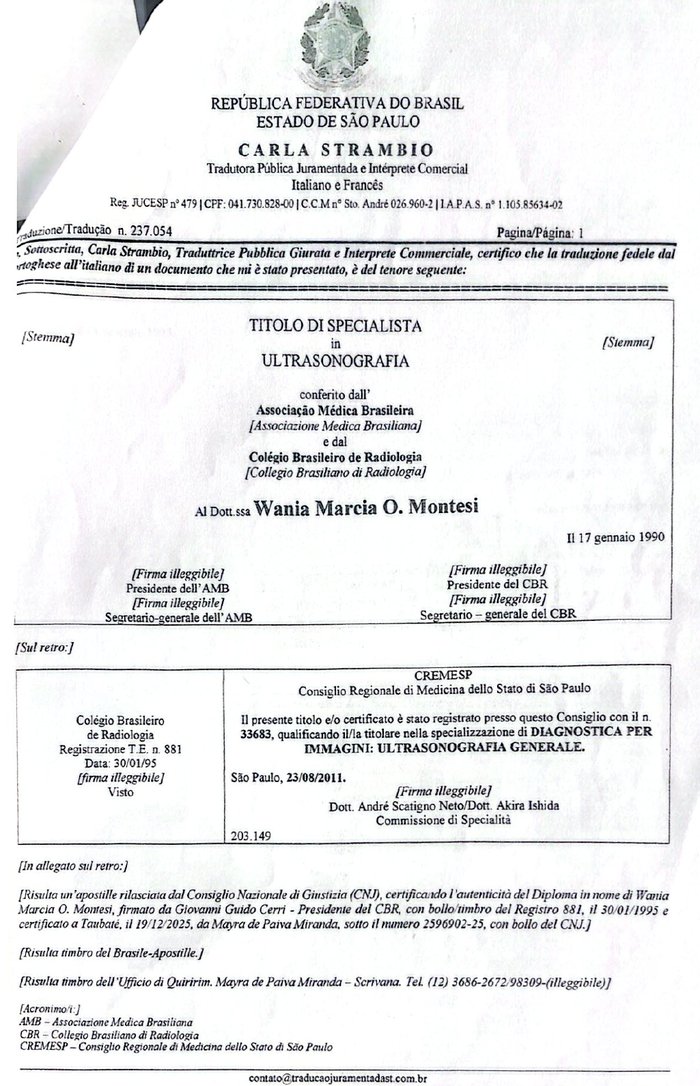
Dr. Wania Márcia de Oliveira Montesi

  • Medical Doctor specialized in Ultrasonography

Dr. Wania Márcia de Oliveira Montesi is a Medical Doctor specialized in Radiology and Diagnostic Imaging – Ultrasonography, with over 35 years of professional experience in outpatient and hospital settings.

She has developed solid expertise in ultrasound (ultrasonography), diagnostic imaging and medical reporting.

Throughout her career she has worked at several healthcare facilities in Brazil, also as part of multidisciplinary teams, developing particular attention to overall clinical assessment and patient care.

At the Nutrizione Prevenzione Medical Centre in Pordenone, her ultrasound expertise is offered to patients on request and, when indicated, is integrated into prevention and specialist assessment programmes, contributing to more complete and coordinated patient care.

  • Degree in Medicine – Escola de Medicina da Santa Casa de Misericórdia de Vitória (EMESCAM), Brazil
  • Specialist Title in Ultrasonography – Associação Médica Brasileira and Colégio Brasileiro de Radiologia (1990)
  • Specialist Title in Ultrasonography – sworn Italian translation
  • Abdominal ultrasound, complete or partial
  • Thyroid ultrasound
  • Soft tissue ultrasound
  • Musculoskeletal and joint ultrasound
  • Genitourinary ultrasound
  • Prostate ultrasound
  • Transvaginal ultrasound